About PathVynt
We build the perception infrastructure. You build the robot.
PathVynt is not a robot manufacturer, not a simulation platform, and not a mapping company. We write the perception and navigation code that goes inside your robot, so your team doesn't have to.
Founding Story
Mountain View, 2021. The same calibration bug, for the fourth time.
Michael Torres was writing the perception stack for a last-mile delivery robot in Mountain View when he hit a familiar problem: extrinsic calibration drift caused by thermal expansion of the mounting bracket. He had patched the same bug — in slightly different form — on three prior robotics projects. The fix wasn't hard. The repetition was.
He started PathVynt in 2021 with a specific hypothesis: the LiDAR-camera fusion layer, the occupancy grid, and the map-relative localization module are not differentiating problems. Every team re-solves them, poorly and under deadline. If you could drop in a production-ready version of all three, robotics teams could spend their engineering time on the problems that actually differentiate their product — the motion policy, the human-interaction logic, the operational edge cases that make the difference between a robot that ships and one that doesn't.
PathVynt is independently funded and intends to stay that way. A small team with a narrow scope means we can be honest about what the SDK does and does not do, respond to integration issues the same day, and keep the API surface small enough that engineers actually read the docs.

Team
The people behind the SDK
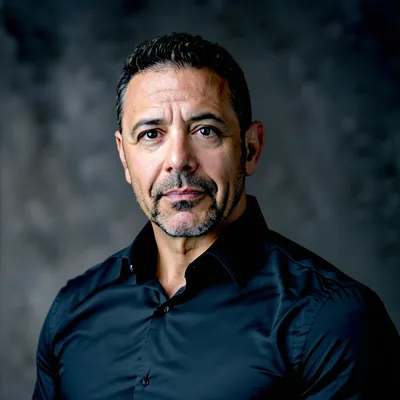
Michael Torres
CEO & CTO
Previously led perception software at a last-mile delivery robotics company in Mountain View. Wrote the first LiDAR-camera fusion module that became PathVynt's core in 2021.
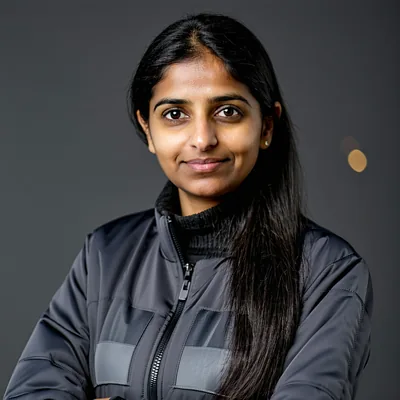
Dr. Priya Nair
Head of Perception
SLAM researcher turned SDK engineer. Leads PathVynt's map-relative localization and keyframe matching work. PhD focused on feature persistence under occlusion in dynamic indoor environments.
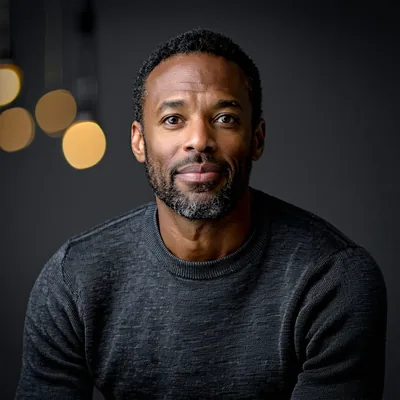
Kai Okafor
Lead Systems Engineer
Embedded systems specialist. Responsible for PathVynt's Jetson optimization passes and real-time scheduling guarantees on constrained hardware.
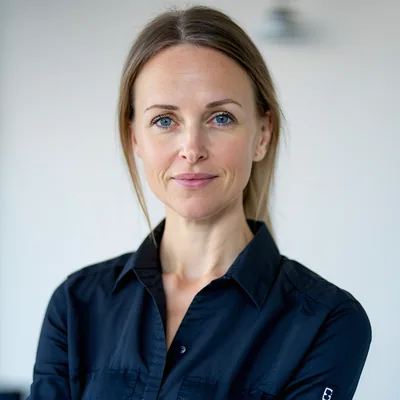
Ines Varga
Perception Engineer
Specializes in occupancy prediction and point cloud filtering. Led the rain/dust/fog robustness work that ships in PathVynt v1.3+.
Principles
How we make decisions
Measure, don't assume
Every performance claim in our docs comes with the measurement setup: hardware, config tier, scene type. If we can't measure it on reference hardware, we don't publish the number.
Production over research
We ship things that work in real environments. The fusion module covers LiDAR + camera + IMU precisely — not twelve sensor types loosely. Narrow scope, high reliability.
Ergonomics matter
An SDK that takes two weeks to integrate doesn't get used. The C++ wrapper, ROS 2 bridge, and Python bindings are all open — read exactly how PathVynt hooks into your stack before committing to it.
Direct feedback loop
When you file a bug or report unexpected behavior from the field, the same engineers who wrote the code respond. No ticket queue separating you from the people who can fix it.
What PathVynt is not
PathVynt is not a robot manufacturer. We don't sell hardware, sensors, or actuators. We are not a simulation platform — we don't have a physics engine or a synthetic training environment. We are not a mapping company — we don't sell HD maps or operate mapping fleets. We write the perception and navigation software that runs inside your robot, on your hardware, against your maps. That's the whole job.
Meet the team directly
We do brief technical intros with teams evaluating PathVynt. Bring your hardware specs and architecture questions.