Yard & Freight Automation
Autonomous Trucks
Yard automation, port logistics, and controlled-route freight — where chassis vibration, dust exposure, and multi-kilometer localization drift are the engineering constraints.
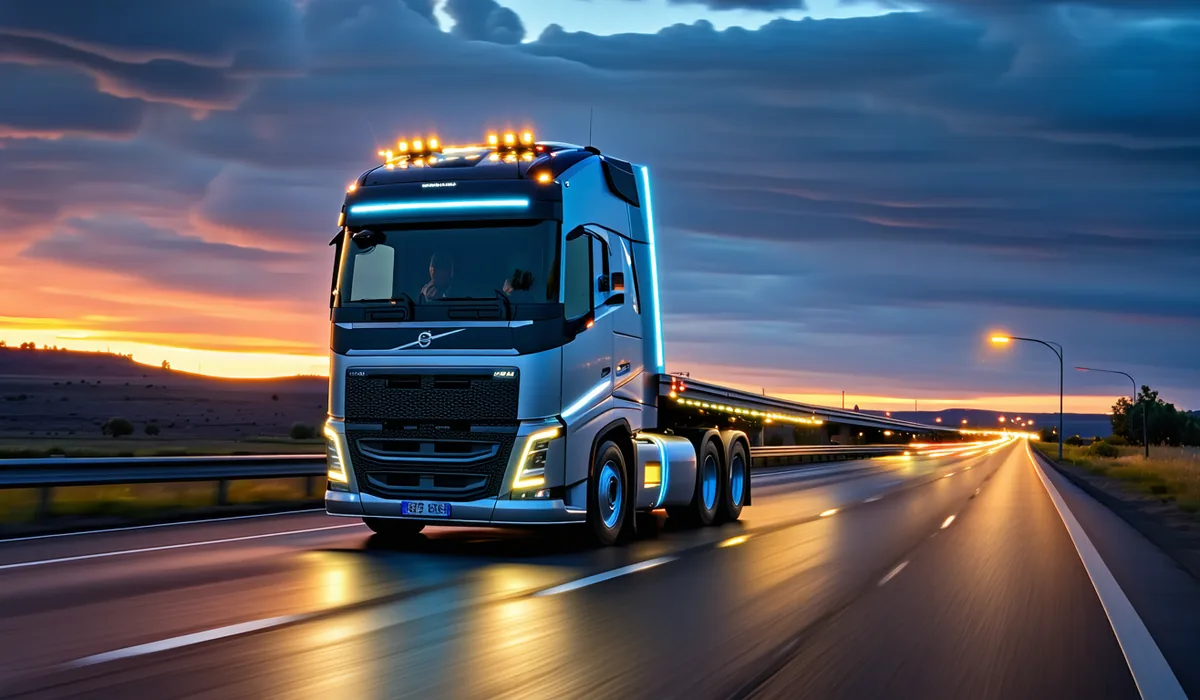
The deployment context
Yard and port truck automation operates in semi-structured outdoor environments at speeds of 15–30 km/h. The challenge profile is fundamentally different from AMRs: the chassis is large, vibrates significantly, and operates in dust- and rain-prone conditions. A 64-channel long-range LiDAR with a stereo camera pair is typical, providing 100m+ detection range at speed.
Localization over multi-kilometer yard routes is the critical technical problem. GPS is often unavailable or unreliable inside dense port container stacks. PathVynt's localization module maintains a keyframe database anchored to fixed infrastructure (crane columns, painted markings, building facades) and uses GNSS updates when available as an external correction signal.
Key configuration choices
- Sensor config: 64-channel long-range LiDAR (primary) + stereo camera. Multi-LiDAR configurations are supported — a second rear-facing LiDAR can be added for full 360° coverage.
- Drift model:
DriftModel::HEAVY_VEHICLE_OUTDOOR— uses a higher process noise parameter tuned for truck vibration profiles. Extrinsic recalibration triggers more frequently on rough surfaces. - Localization: GNSS-aided lane map with fallback to feature-only localization when GNSS signal drops. Lateral accuracy targets <20cm on known routes.
- Prediction: 1.0–2.0s horizons. Pedestrian detection range extended to 40m via LiDAR point cluster classification at higher density.
FusionConfig cfg;
cfg.lidar_model      = LiDARModel::LONG_64;
cfg.camera_mode      = CameraMode::STEREO;
cfg.drift_model      = DriftModel::HEAVY_VEHICLE_OUTDOOR;
cfg.power_profile    = PowerProfile::FULL;
cfg.gnss_integration = GNSSMode::AIDED_WITH_FALLBACK;
cfg.pred_horizons    = {1.0f, 2.0f};
cfg.occ_near_res     = 0.05f;  // 5cm near (0-15m)
cfg.occ_far_res = 0.20f; // 20cm far (15-80m)Evaluating PathVynt for yard or port automation?
Request access to the evaluation SDK with the heavy-vehicle configuration profile and run the stack on your sensor rig.